Intro
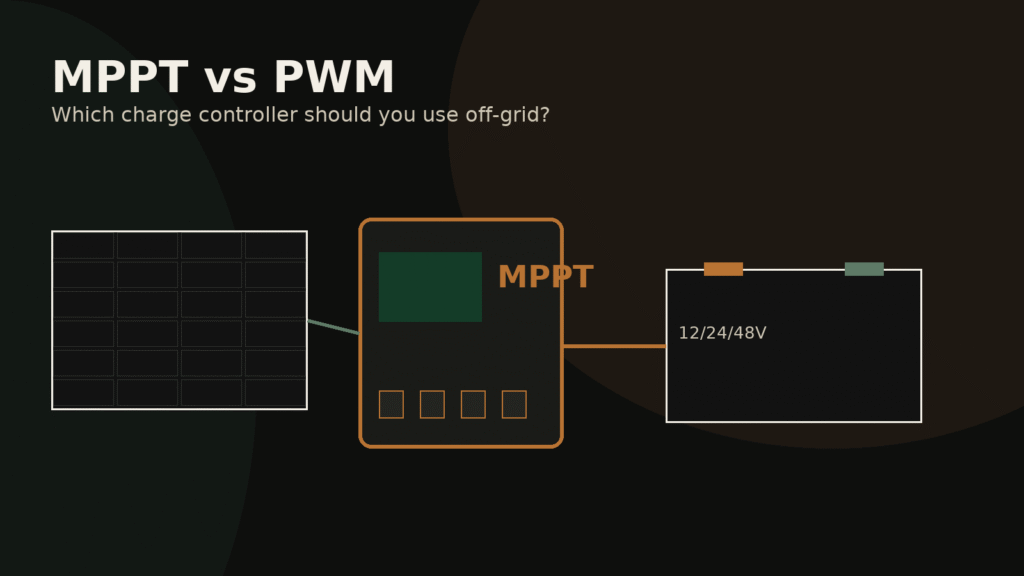
Off-grid power lives or dies by charging efficiency. Here’s a field-tested breakdown of MPPT vs PWM so you pick the right controller for your array, climate, and budget—without guesswork.
What a Charge Controller Actually Does
- Prevents overcharging.
- Sets proper charge stages (bulk/absorb/float).
- Protects batteries from reverse current at night.
PWM in Plain English
- How it works: Rapidly connects/disconnects panels to hold battery at target voltage.
- Best when:
- 12V panels into 12V batteries (voltage matched)
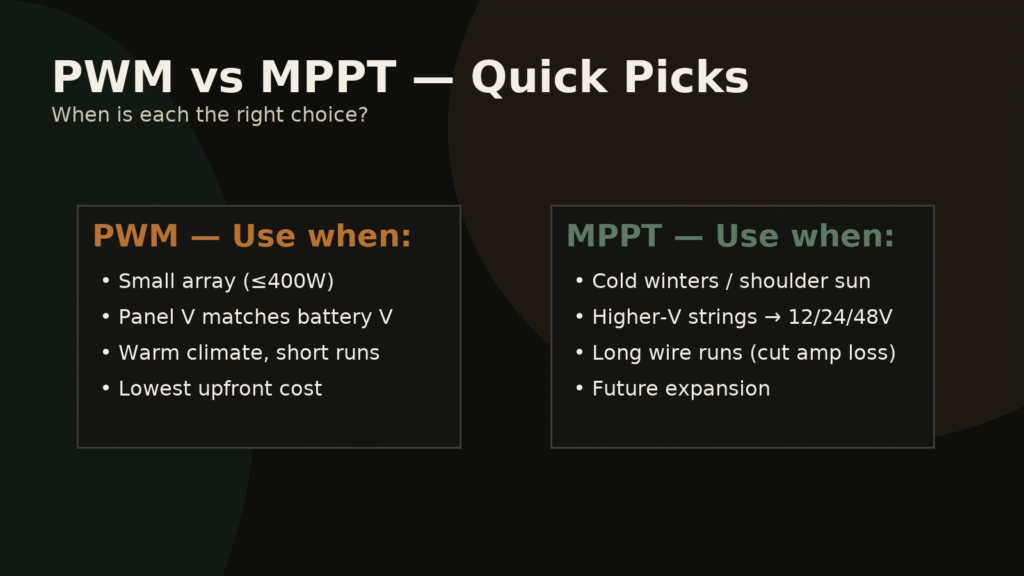
- Small arrays (≤400W)
- Warm climates with short wire runs
- Pros: Simple, cheap, reliable.
- Cons: Wastes panel voltage headroom; lower harvest in cold/shoulder sun.
MPPT in Plain English
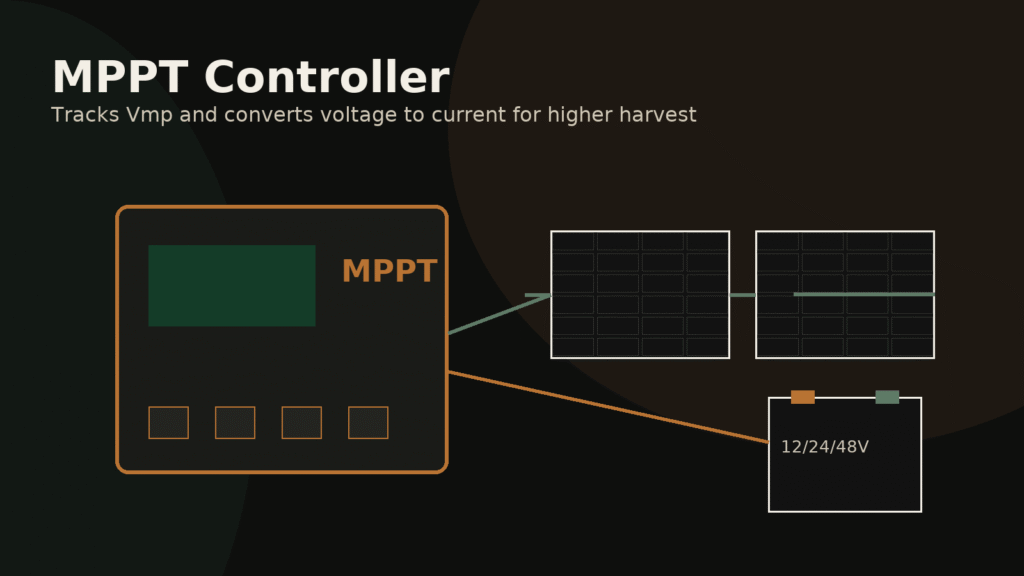
- How it works: DC-DC converter “tracks” the array’s max power point and steps voltage down while boosting current.
- Best when:
- Higher-voltage strings into 12/24/48V banks
- Cold climates (panel voltage rises in cold)
- Long wire runs (use higher array voltage to cut amp losses)
- Pros: 10–30% more harvest in many real conditions; flexible stringing.
- Cons: Higher cost; needs correct sizing.
How Much Extra Power Does MPPT Get?
- Cold mornings / winter: biggest gains (15–30% common).
- Hot summer noon: small gains (0–10%).
- Cloud edge / variable irradiance: MPPT reacts faster, often +10–20%.
Sizing: Don’t Cook the Controller
- Controller input limits are for STC; cold can push Voc higher.
- Use array Voc @ min temp from the panel datasheet and keep below controller max Voc with headroom (~10%).
- Output current = array watts ÷ battery volts ÷ efficiency (~0.98).
- Pick next size up if near limits or if you want expansion.
Quick Picks (rule of thumb)
- ≤200–400W, 12V battery, panels close by, warm climate → PWM is fine.
- >400W, cold winters, long runs, 24/48V bank, mixed panel Vmp → MPPT.
Wiring & Safety Notes
- Use proper DC breakers/fuses, combiner if multiple strings.
- Keep controller near the batteries (short, fat battery cables).
- Match charge profile to chemistry (LiFePO4 vs AGM).
FAQ
Q: Can I upgrade to MPPT later?
A: Yes—wire the array for the future voltage now if possible.
Q: Two smaller MPPTs or one big one?
A: Two can be more flexible/efficient with differently oriented sub-arrays.
Q: Will MPPT fix shade issues?
A: No. Shade kills current. Use parallel strings/microinverters if shade is frequent.
Leave a Reply